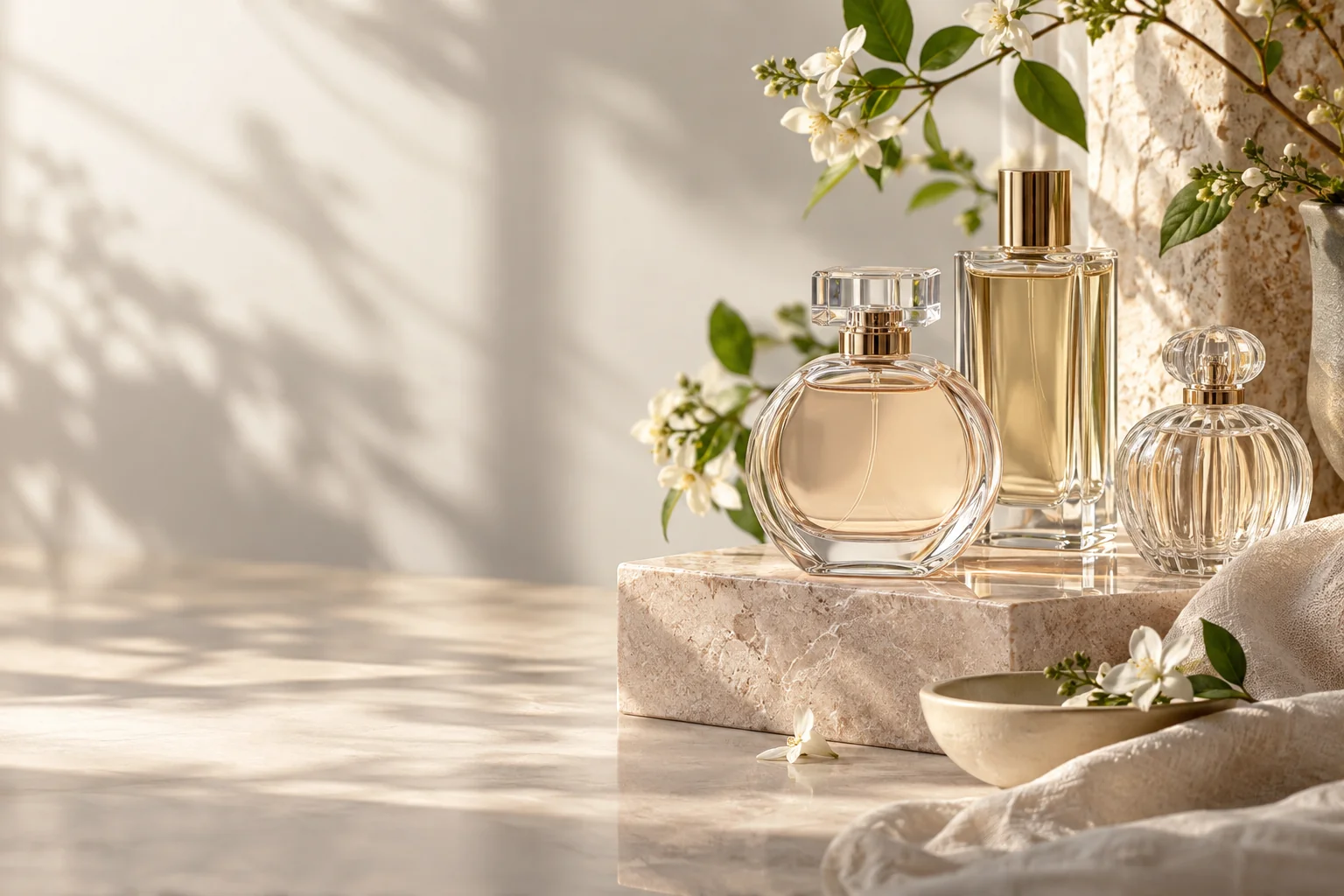
In the perfume and cosmetics department, fragrance is the category where the label tells you the least about the experience. Two bottles of the same size can smell completely different, last for different lengths of time and suit different seasons. This guide covers the vocabulary on the box, the meaning of concentration and bottle size, and a sensible way to test a scent so that the choice is made on the skin rather than on the description.
Concentration: parfum, EDP, EDT and cologne
The abbreviations describe how much fragrance oil is dissolved in alcohol and water. The figures below are typical ranges, and brands differ.
- Parfum or extrait: roughly 20 to 30 percent oil, the richest and most lasting, usually sold in small bottles.
- Eau de parfum (EDP): roughly 15 to 20 percent oil. It generally lasts several hours and stays closer to the skin.
- Eau de toilette (EDT): roughly 5 to 15 percent oil. Lighter, often brighter at the start and more suitable for warm weather or the office.
- Eau de cologne: roughly 2 to 5 percent oil, a quick, fresh splash.
Higher concentration does not automatically mean a better scent. It means a stronger and longer-lasting one, and a light EDT may be the right answer for a small office or a hot day. How long a perfume lasts also depends on skin type, climate and the composition itself.
Reading the fragrance notes
Notes are grouped in three layers. Top notes are what you smell in the first minutes: citrus, bergamot, green leaves, light fruit. Heart notes appear as the top fades and form the character: rose, jasmine, peony, lily of the valley, spices. Base notes remain for hours: vanilla, amber, musk, sandalwood, patchouli, cedar.
Fragrance families are a quicker way to narrow the choice:
- Floral: single flowers or bouquets, from soft to heady.
- Fruity: berries, pear, peach, often combined with florals.
- Fresh or aquatic: citrus, water notes, green accords.
- Woody and chypre: dry wood, moss and earthy tones.
- Oriental or gourmand: vanilla, amber, caramel-like or spiced sweetness.
Someone who likes a particular family in other products, such as a body lotion or a candle, will often like the family in perfume as well.
Bottle size: 90 to 150 ml
Common sizes range from 30 ml up to 100 ml and beyond. Bottles of 90 to 150 ml are large formats. They hold roughly 900 to 1,500 sprays, since a spray is about 0.1 ml. A daily user applying four sprays would take many months to finish a 100 ml bottle.
A large bottle makes sense when the scent is already known and loved. If you are unsure, a smaller bottle or sample reduces the risk. Remember that fragrance changes slowly with age: heat, light and air accelerate it. A bottle that will be used over more than two or three years should be kept in a cool, dark place, with the cap on, and not on a sunny bathroom shelf.
How to test a scent properly
Paper blotters give an idea of the top notes only. For a real impression, spray on the inner wrist or the crook of the elbow, do not rub, and wait. Wait at least 20 to 30 minutes to meet the heart, and several hours to meet the base. Test no more than two or three scents at a time, as the nose tires quickly. Smelling coffee beans or simply your own sleeve between tests is a common way to reset.
Skin chemistry matters: the same perfume can smell sweeter on one person and drier on another. Wearing it for a full day is more reliable than a quick impression.
Practical points
- Check the full name carefully. Brands issue several versions with similar names, such as flankers, intense versions, or editions with different concentrations.
- Read the ingredient list if you have sensitive skin or known allergies. Fragrance allergens are listed on the packaging in many markets. If a reaction occurs, stop using the product and consult a doctor or pharmacist.
- Alcohol-based perfumes are flammable. Keep them away from open flame, and avoid spraying near the eyes.
- Seasonal use: lighter, fresher scents tend to work in summer; warmer, resinous or sweet scents are noticed more in cold weather.
- Layering: a matching body lotion can extend wear time without increasing the number of sprays.
Pre-purchase checklist
- Decide whether you want an EDP or EDT and what the occasion is.
- Choose a fragrance family and compare the notes, not only the name.
- Check the exact edition and bottle volume in millilitres.
- Consider whether a large 90 to 150 ml format is sensible for an untested scent.
- Check the ingredient list for known allergens.
- Plan where the bottle will be stored.
 Furniture and interiorHow to Choose an Armchair
 Kitchen and householdHow to Choose a Frying Pan
 ToysHow to Choose a Board Game
 ComputersHow to Choose a Computer Mouse
 Diy and toolsHow to Choose a Cordless Drill Driver
 Clothing shoes and accessoriesHow to Choose a Men's T-Shirt or Polo Shirt
 Health and beautyHow to Choose a Home Blood Pressure Monitor
 Tv audio and videoHow to Choose a TV: OLED, QLED, Size and Specs Explained
 Food and drinkHow to Choose Coffee Beans and Capsules
 Home appliancesHow to Choose an Automatic or Capsule Coffee Machine
 Sport and outdoorsHow to Choose a Treadmill or Walking Pad
 GardenHow to Choose a Lawn Mower: Petrol or Electric, Push or Self-Propelled
 Plumbing heating and climateHow to Choose a Tower, Desk or Handheld Fan
 Kids and babyHow to Choose a Pushchair or Travel System: Weight, Fold, Seat
 Car and motorbikeHow to Choose a Dash Cam: Resolution, GPS, Wi-Fi, ADAS, Rear
 Pet suppliesHow to Choose Dog Toys: Chew, Rope, Ball and Plush Toys Compared
 Gifts decorations and flowersHow to Choose a Mug as a Gift: Novelty, Porcelain, Self-Stirring
 BooksHow to Choose Manga and Fiction Editions: Omnibus and Deluxe