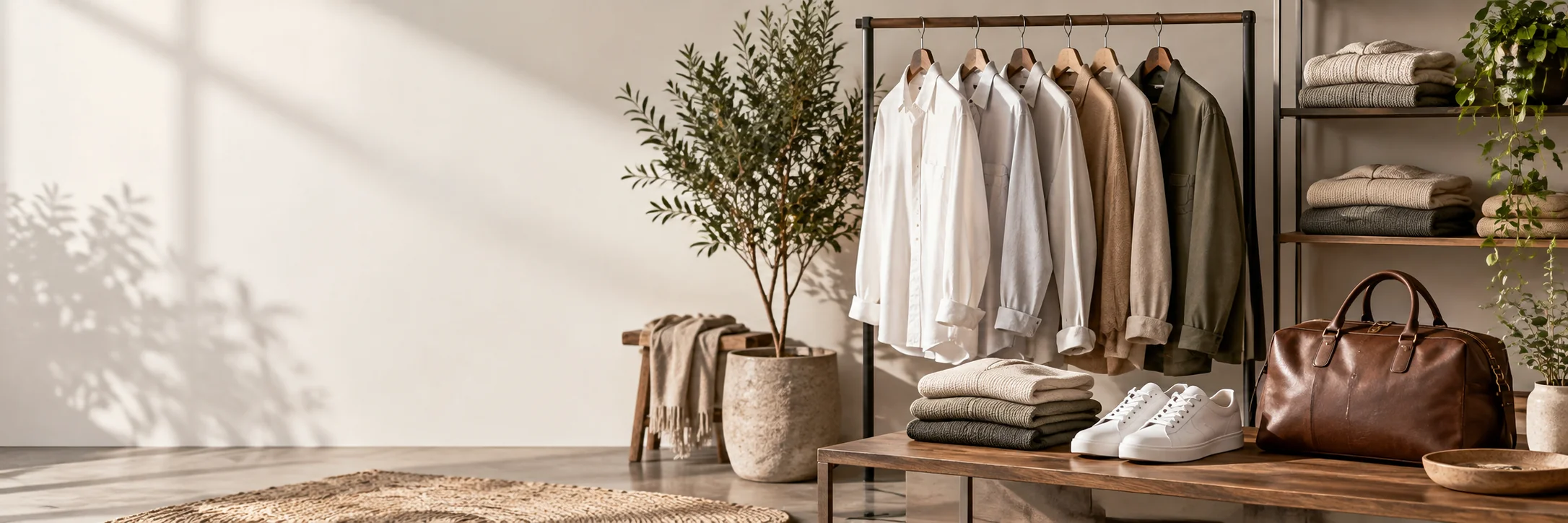
In the clothing, shoes and accessories department, T-shirts and polo shirts are the basic layer of most wardrobes, which is why small differences in fabric and cut show up quickly. A shirt that twists after the first wash or fits badly at the shoulders is irritating every time it is worn. This guide explains how to read the fabric information, how to judge fit from the measurements, and how the polo differs from the T-shirt.
Fabric and fibre
The composition label is the most useful piece of information. Common options are:
- Cotton: breathable, soft and absorbent, the standard fibre for T-shirts. It dries slowly and can shrink on the first washes.
- Combed or ring-spun cotton: the short fibres are removed and the yarn is spun tightly, giving a smoother and stronger fabric. It is usually mentioned in the description as a quality indicator.
- Organic cotton: grown under certified rules. Look for a recognised certification instead of the word alone.
- Cotton-polyester blends: less wrinkling and shrinking, quicker drying, often a little less breathable.
- Elastane or spandex (2 to 5 percent): adds stretch and shape retention, useful for slim cuts.
- Piqué: a textured knit with small raised pattern, typical for polo shirts, more durable and airy than plain jersey.
Fabric weight is given in grams per square metre (gsm). About 120 to 150 gsm is light and suits hot weather or layering, 160 to 190 gsm is a standard everyday weight, and 200 gsm and above is a heavy, durable fabric that holds its shape. Lighter fabrics may be more transparent and wear thinner sooner.
Fit and sizing
Sizes such as S, M and L vary between manufacturers, so compare measurements, not letters. Take a shirt that fits you well, lay it flat, and measure chest width (armpit to armpit, doubled) and length from the shoulder. Then compare these with the size chart. Check also the shoulder seam, which should sit at the edge of the shoulder, and the sleeve, which should end around the middle of the upper arm.
Typical cuts are:
- Slim fit: closer to the body, often contains elastane.
- Regular fit: straight cut, comfortable for most body shapes.
- Relaxed or oversized: wider body, longer sleeve, dropped shoulders.
Allow for shrinkage. A 100 percent cotton shirt may shrink by up to 3 to 5 percent in length on the first hot washes, unless it is pre-shrunk. If the size chart gives two measurements close to yours, the larger size is safer for cotton, the smaller for a stretch blend.
T-shirt details
The neckline is important: a crew neck is the standard, while a V-neck shows more of the chest and is easier to wear under an open shirt. A rib-knit collar with some elastic keeps its shape better than a plain edge. A taped neck seam improves comfort. Side seams, rather than a tube cut, usually give a better fit, though tubular knitting avoids seams and chafing. Print quality varies: screen prints sit on the fabric and can crack when washed hot, while a woven or embroidered detail lasts longer. Wash such shirts inside out.
Polo shirt details
A polo has a collar and a button placket, usually of two or three buttons. The collar should lie flat and have structure; a soft, floppy collar curls after washing. Check that the buttons are sewn firmly and that the placket is reinforced. Polo shirts are often a little longer at the back, a feature known as a shirt tail hem. Short sleeves can have a ribbed cuff or a plain hem. Piqué cotton is the classic polo fabric, while a fine jersey gives a smoother, dressier look. A polo can be worn for casual office days or social occasions where a T-shirt feels too relaxed.
Care and longevity
Follow the care label. Washing at 30 to 40 C, turning the shirt inside out, and avoiding the tumble dryer on high heat reduce shrinkage and fading. Dark colours should be washed separately in the first few washes. Hang to dry to keep the collar of a polo in shape. Light colours in thin fabric can show sweat marks, and the thicker weights hide them better.
Pre-purchase checklist
- Check the fibre composition and gsm weight.
- Compare chest and length measurements with a shirt you already own.
- Decide between slim, regular and relaxed fits.
- Allow for shrinkage in 100 percent cotton.
- For a polo, look at the collar structure and button placket.
- Read the care label and note the washing temperature.
- Look at the neckline, seams and print or embroidery quality.
 Furniture and interiorHow to Choose an Armchair
 Perfume and cosmeticsHow to Choose a Women's Perfume
 Kitchen and householdHow to Choose a Frying Pan
 ToysHow to Choose a Board Game
 ComputersHow to Choose a Computer Mouse
 Diy and toolsHow to Choose a Cordless Drill Driver
 Health and beautyHow to Choose a Home Blood Pressure Monitor
 Tv audio and videoHow to Choose a TV: OLED, QLED, Size and Specs Explained
 Food and drinkHow to Choose Coffee Beans and Capsules
 Home appliancesHow to Choose an Automatic or Capsule Coffee Machine
 Sport and outdoorsHow to Choose a Treadmill or Walking Pad
 GardenHow to Choose a Lawn Mower: Petrol or Electric, Push or Self-Propelled
 Plumbing heating and climateHow to Choose a Tower, Desk or Handheld Fan
 Kids and babyHow to Choose a Pushchair or Travel System: Weight, Fold, Seat
 Car and motorbikeHow to Choose a Dash Cam: Resolution, GPS, Wi-Fi, ADAS, Rear
 Pet suppliesHow to Choose Dog Toys: Chew, Rope, Ball and Plush Toys Compared
 Gifts decorations and flowersHow to Choose a Mug as a Gift: Novelty, Porcelain, Self-Stirring
 BooksHow to Choose Manga and Fiction Editions: Omnibus and Deluxe