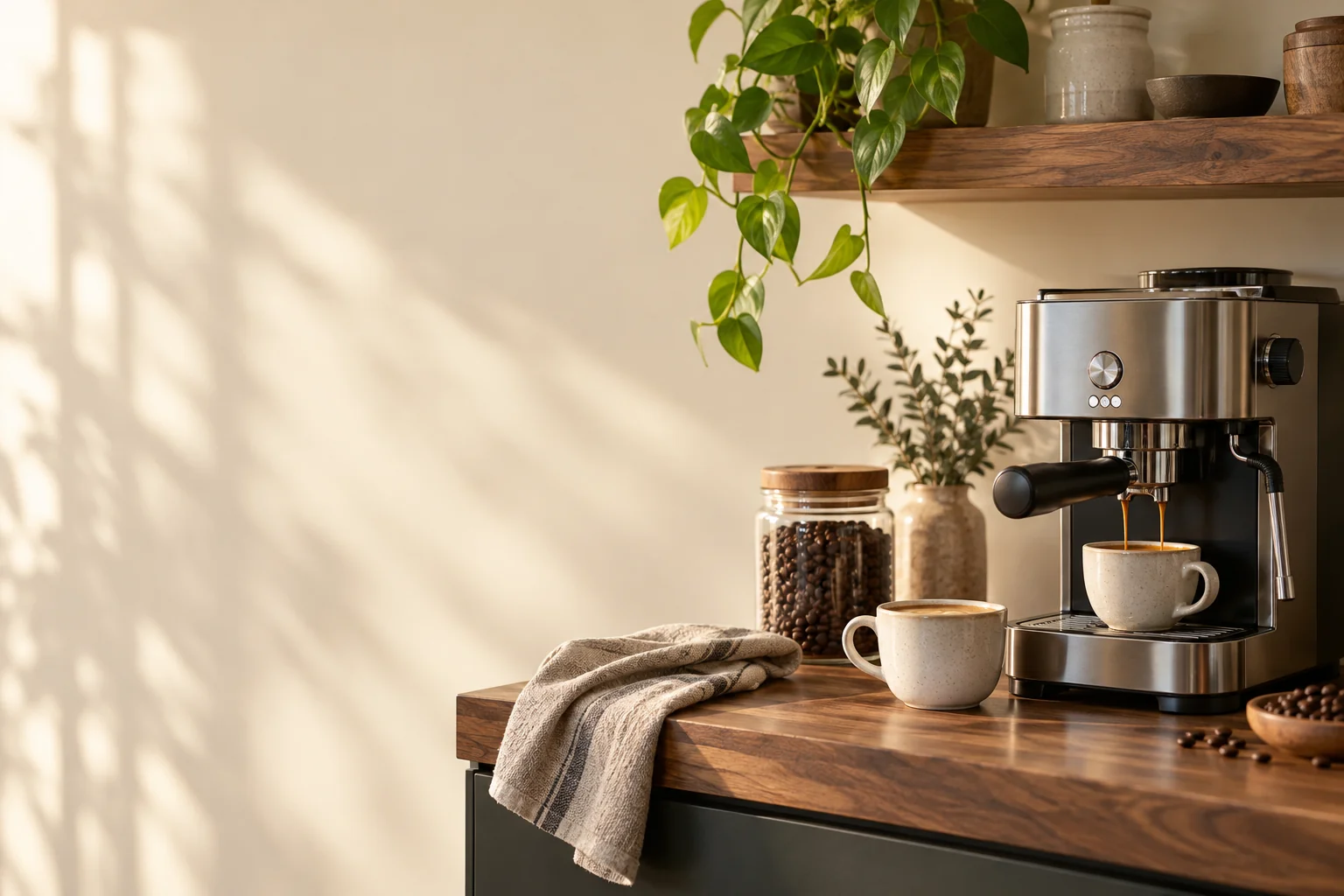
Small kitchen appliances in the home appliances department include automatic bean-to-cup coffee machines and capsule machines. They solve the same problem, a cup of coffee at the touch of a button, but in different ways, with different running costs and maintenance. This guide explains the two types, what the figures on the specification list mean, and what to check so the machine suits your kitchen and your habits.
Bean-to-cup or capsule
A bean-to-cup machine contains a grinder, a brewing unit and often a milk system. You fill the bean hopper and the water tank, press a button, and the machine grinds, tamps, brews and discards the used grounds into a container. It gives control over grind and strength, and whole beans are generally cheaper per cup than capsules. The machines are larger, need regular cleaning and descaling, and usually take more time to warm up and rinse.
A capsule machine heats water and forces it through a sealed capsule. It is compact, fast, quiet and simple to clean, and the result is consistent. The limits are the cost per cup, the waste from used capsules, and the fact that each machine is built for one capsule system, so the choice of coffee is tied to that system.
Pump pressure and temperature
Pump pressure is given in bar. Espresso is traditionally brewed at around 9 bar at the coffee, and many machines list 15 or 19 bar for the pump. That figure is the maximum the pump can produce, not the pressure at the puck, which is regulated lower. A higher number on the box therefore does not mean better coffee. What matters more is stable water temperature, typically in the range of 90 to 96 degrees Celsius, and consistent flow. Some models allow temperature adjustment, which helps with different roasts.
Grinder and brewing unit
- Burr grinders crush beans between two surfaces and give a more even grind than blade grinders. Ceramic and steel burrs are both used.
- Grind settings: from three to over a dozen steps. More steps allow finer adjustment for different beans.
- Brewing unit: a removable unit can be rinsed under the tap, which simplifies hygiene. A fixed unit is cleaned by the machine's own cycles.
- Dose: the amount of ground coffee per cup, usually 7 to 12 g, may be adjustable.
- Heating system: a thermoblock heats on demand and is quick; a boiler holds more hot water and gives steadier temperature in some designs.
Milk options
Machines handle milk in different ways. Manual steam wands let you froth milk yourself and give the most control, with some practice. Automatic frothers draw milk from a carafe or a hose and make cappuccino or latte macchiato at the press of a button, and cleaning the milk circuit after each use is essential. Some capsule machines have a separate milk frother. If you drink mainly black coffee or espresso, a milk system is an unnecessary extra to clean.
Capacity and size
Check the water tank capacity, commonly 1 to 2 litres on automatic machines and 0.6 to 1.5 litres on capsule models. A larger tank means fewer refills. The bean hopper commonly holds 150 to 300 g. The used-grounds container and drip tray capacity decide how often you empty them. Measure the space under cabinets, including the height needed to open the lid and remove the tank, and check the width of the machine and cup clearance, which should fit your tallest mug or glass.
Cleaning and maintenance
Every coffee machine accumulates limescale, which reduces performance and eventually causes failure. Look for an automatic descaling programme and use a descaler of the type specified in the manual. Hard water speeds the build-up, so a water filter cartridge may be worthwhile; check how often it must be replaced and what it costs. Removable parts such as drip trays and milk containers that are dishwasher safe save time. Follow the maker's instructions for rinsing, descaling and storage.
Power, noise and interface
Power ratings of 1,200 to 1,500 W are normal. Noise from the grinder is brief but audible, and some models are quieter than others. Interfaces range from a few buttons to touchscreens with user profiles that store each person's drink settings. Simple controls are easier for a household with varied needs; profiles suit homes where drinks differ. Programmable cup sizes and an adjustable spout height reduce spillage.
Running costs and waste
Consider cost over a year rather than the purchase alone. Bean-to-cup machines use beans, water, filter cartridges and descaler. Capsule machines use capsules plus descaler. Calculate the cost per cup at your normal consumption, and think about the waste you are willing to manage.
Pre-purchase checklist
- Decide between bean-to-cup and capsule based on space, cleaning tolerance and cups per day.
- For capsules, confirm which capsule system the machine uses.
- Check the grinder type, number of settings and removable brewing unit.
- Choose a milk system only if you drink milk-based coffee regularly.
- Check tank capacity and the clearance for your cups.
- Check the descaling programme and the cost of filters and descaler.
- Measure the space on the worktop and under cabinets.
 Furniture and interiorHow to Choose an Armchair
 Perfume and cosmeticsHow to Choose a Women's Perfume
 Kitchen and householdHow to Choose a Frying Pan
 ToysHow to Choose a Board Game
 ComputersHow to Choose a Computer Mouse
 Diy and toolsHow to Choose a Cordless Drill Driver
 Clothing shoes and accessoriesHow to Choose a Men's T-Shirt or Polo Shirt
 Health and beautyHow to Choose a Home Blood Pressure Monitor
 Tv audio and videoHow to Choose a TV: OLED, QLED, Size and Specs Explained
 Food and drinkHow to Choose Coffee Beans and Capsules
 Sport and outdoorsHow to Choose a Treadmill or Walking Pad
 GardenHow to Choose a Lawn Mower: Petrol or Electric, Push or Self-Propelled
 Plumbing heating and climateHow to Choose a Tower, Desk or Handheld Fan
 Kids and babyHow to Choose a Pushchair or Travel System: Weight, Fold, Seat
 Car and motorbikeHow to Choose a Dash Cam: Resolution, GPS, Wi-Fi, ADAS, Rear
 Pet suppliesHow to Choose Dog Toys: Chew, Rope, Ball and Plush Toys Compared
 Gifts decorations and flowersHow to Choose a Mug as a Gift: Novelty, Porcelain, Self-Stirring
 BooksHow to Choose Manga and Fiction Editions: Omnibus and Deluxe